
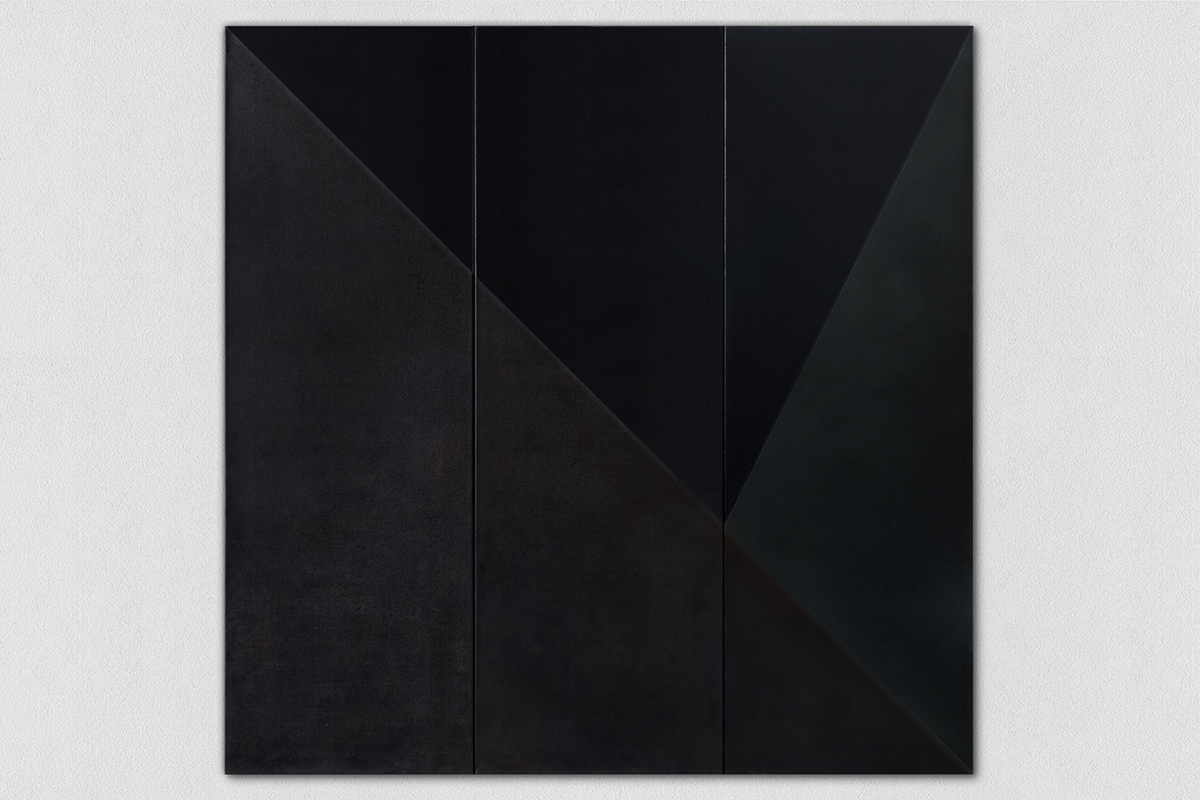
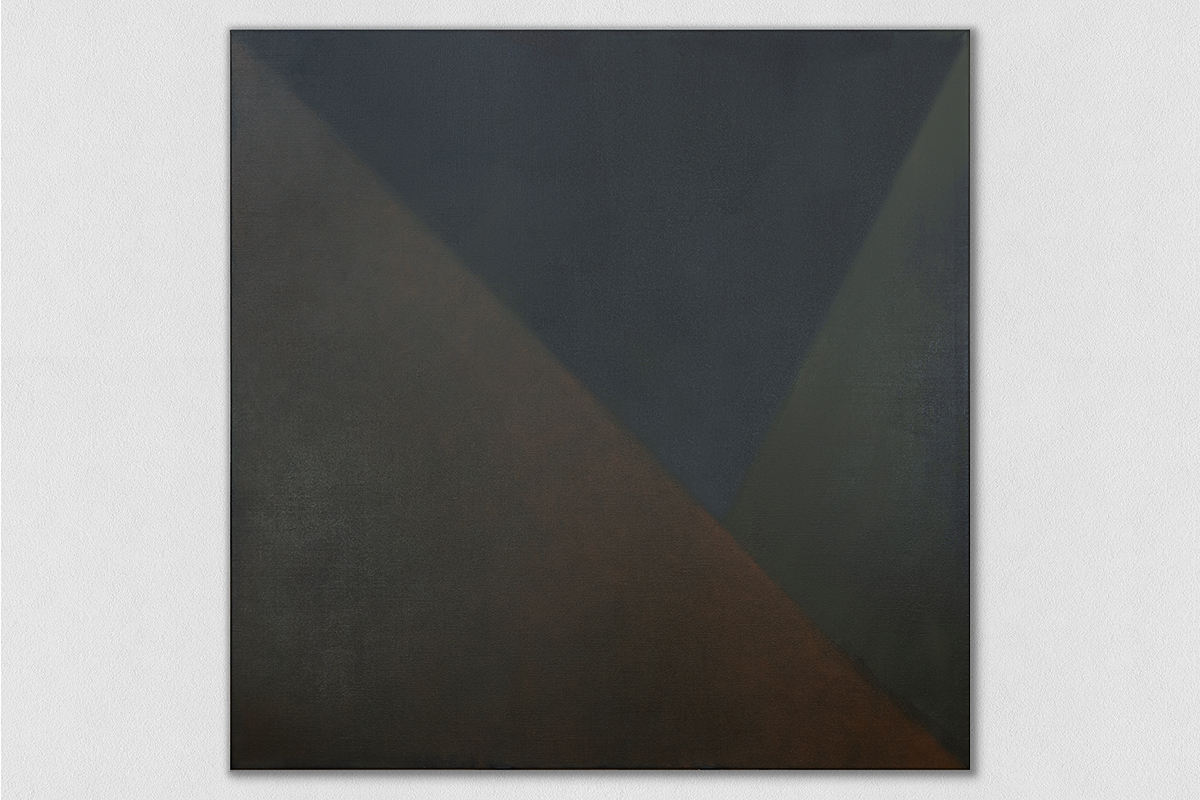
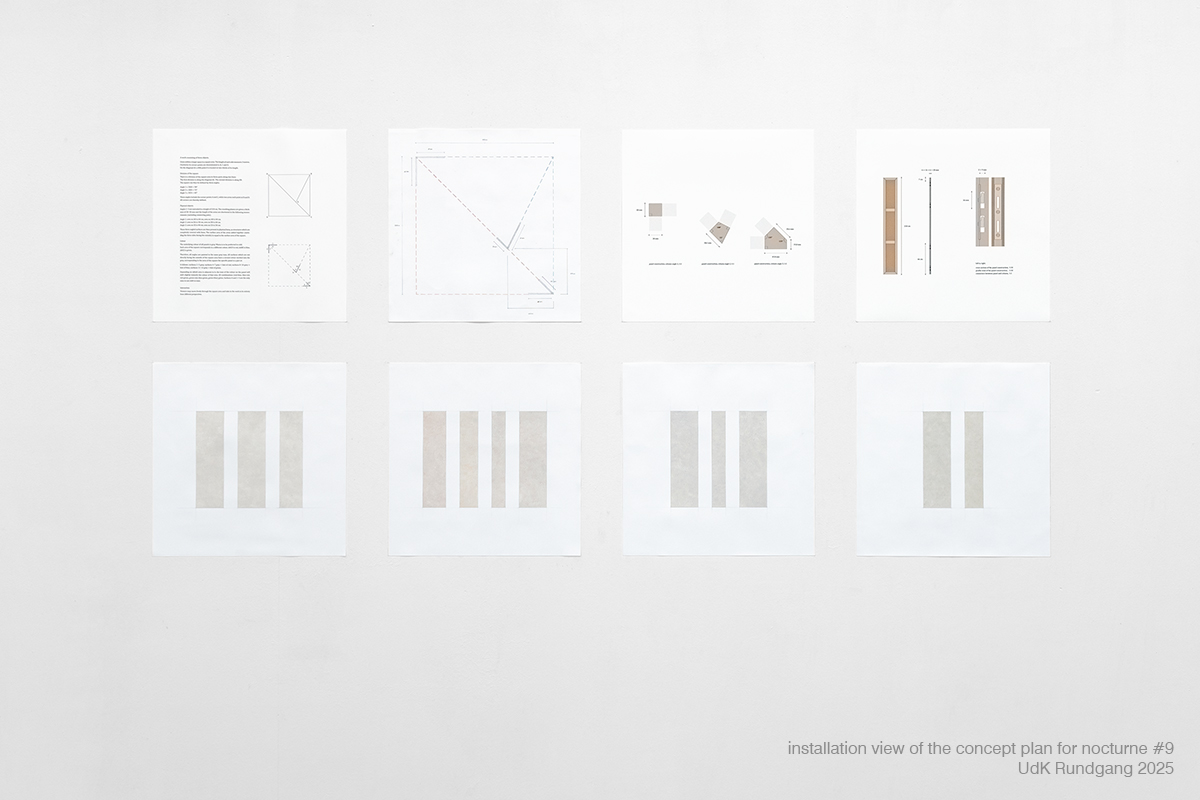
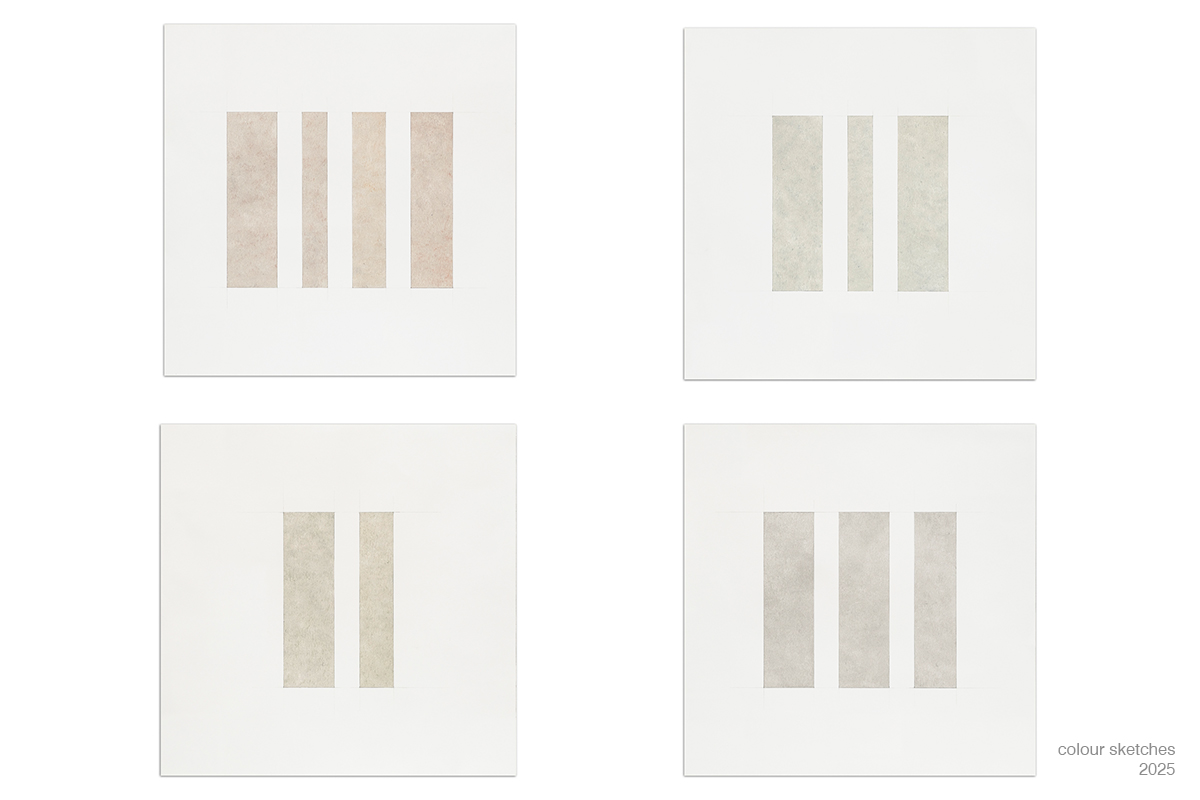


This project
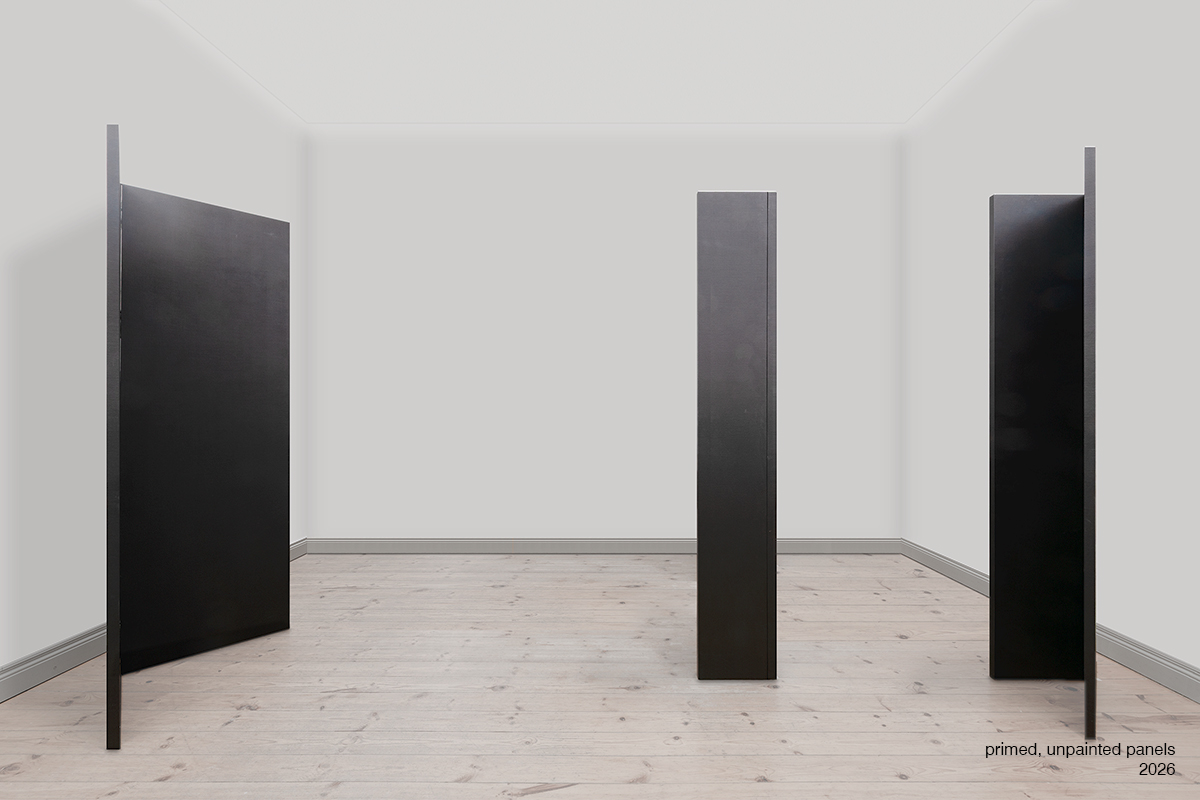
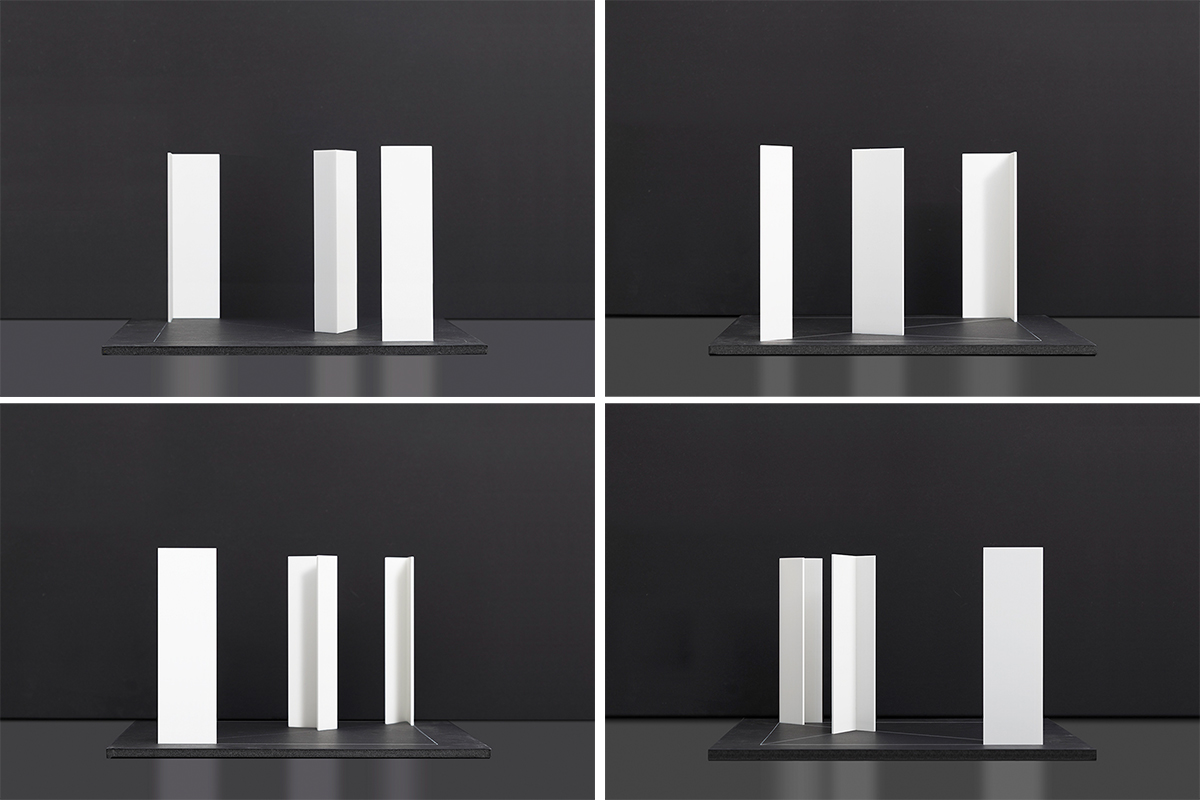
A work consisting of three objects.
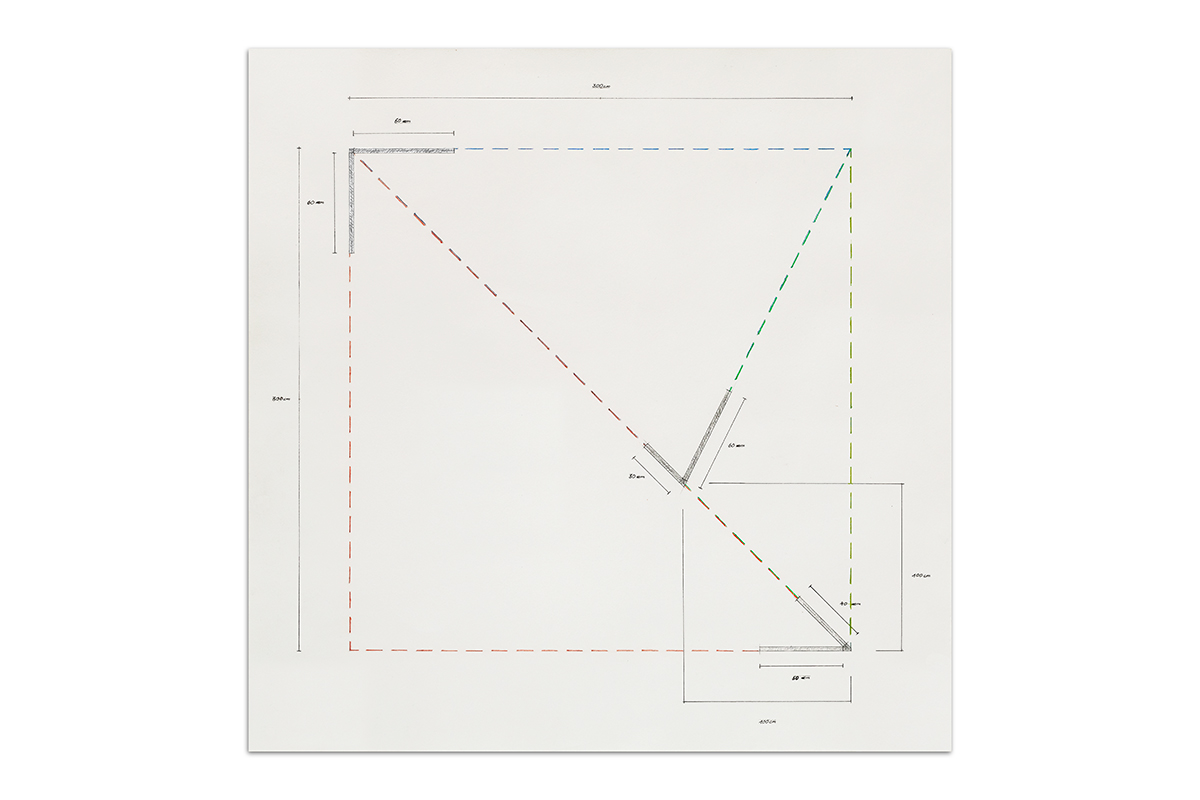
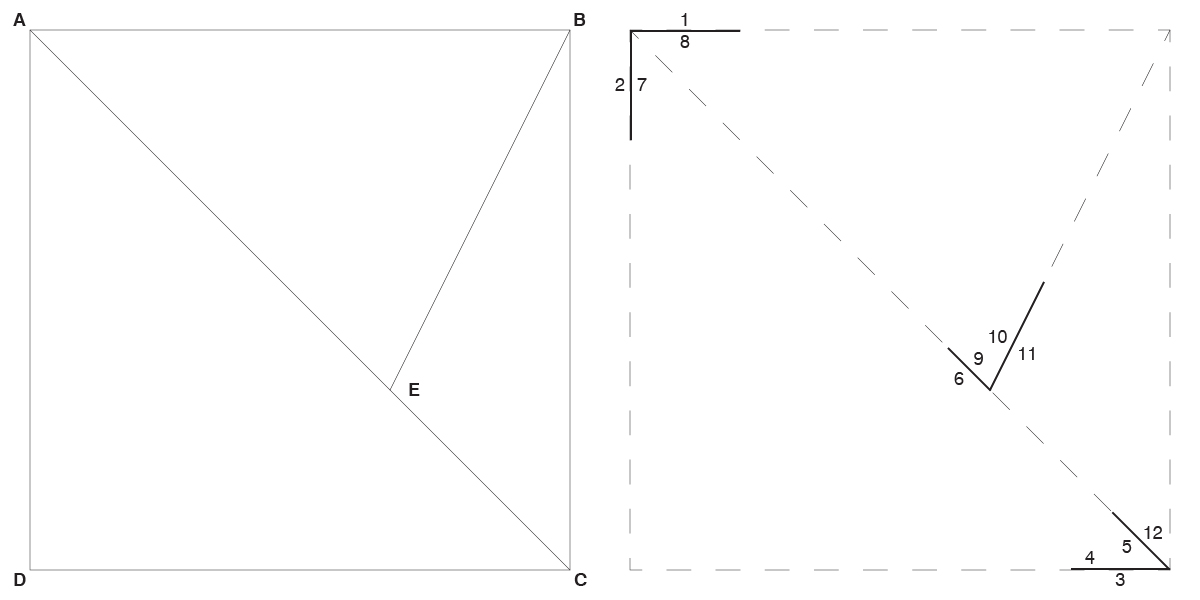
Given within a larger space is a square area. The length of each side measures 3 metres.
Clockwise its corner points are denominated A, B, C and D.
On the diagonal AC a fifth point E is located at two-thirds of its length.
Division of the square
There is a division of the square area in three parts along two lines:
The first division is along the diagonal AC. The second division is along EB.
The square can thus be defined by three angles.
Angle 1 ∡ DAB = 90°
Angle 2 ∡ AEB = 72°
Angle 3 ∡ ECD = 45°
These angles include the corner points A and C, while two arms each point at B and D. All corners are thereby defined.
Physical objects
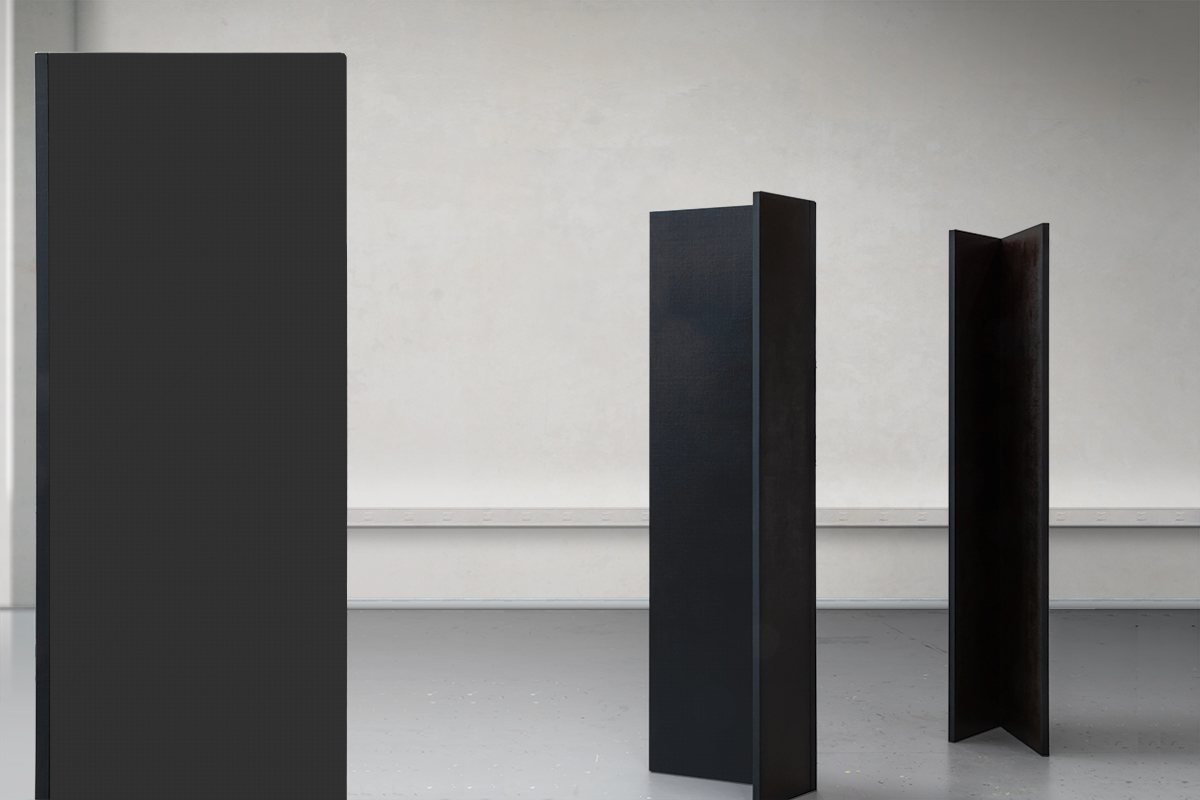
Angles 1–3 are extruded to a height of 210 cm. The resulting planes are given a thickness of 28–30 mm and the length of the arms are shortened to the following measurements (excluding connecting pole):
Angle 1: arm on AD is 60 cm; arm on AB is 60 cm
Angle 2: arm on EA is 30 cm; arm on EB is 60 cm
Angle 3: arm on CE is 40 cm; arm on CD is 50 cm
These three angled surfaces are then present in physical form, as structures which are completely covered with linen. The surface area of the arms added together (excluding the three sides facing the outside) is equal to the surface area of the square.
Colour
The underlying colour of all panels is black. Each area of the square corresponds to a different colour. ∆ACD is red, ∆ABE is blue, ∆BCE is green.
Therefore, all angles are painted in the same black tone. All surfaces which are not directly facing the outside of the square area have a second colour build up from the black, corresponding to the area of the square the specific panel is a part of.
It follows: surfaces 1–3 black; surfaces 4–7 black + red; surfaces 8–10 black + blue; surfaces 11–12 black + green.
Interaction
Viewers may move freely through the square area and take in the work in its entirety from different perspectives.