

This project
I looked down the line, // And I wondered
This verse is written before the start of James Baldwin’s novel “Go tell it on the mountain”. Appropriately, when I first read those lines, they did make me wonder. Lines are omnipresent is our colloquial language, in our way of thinking. Lines are elements both of connection and division. We talk about the lines we should or shouldn’t cross, of the lines that separate one from another. But also, how a line leads us from one point to another, like Ariadne’s string that lets us trace the way in space and time.
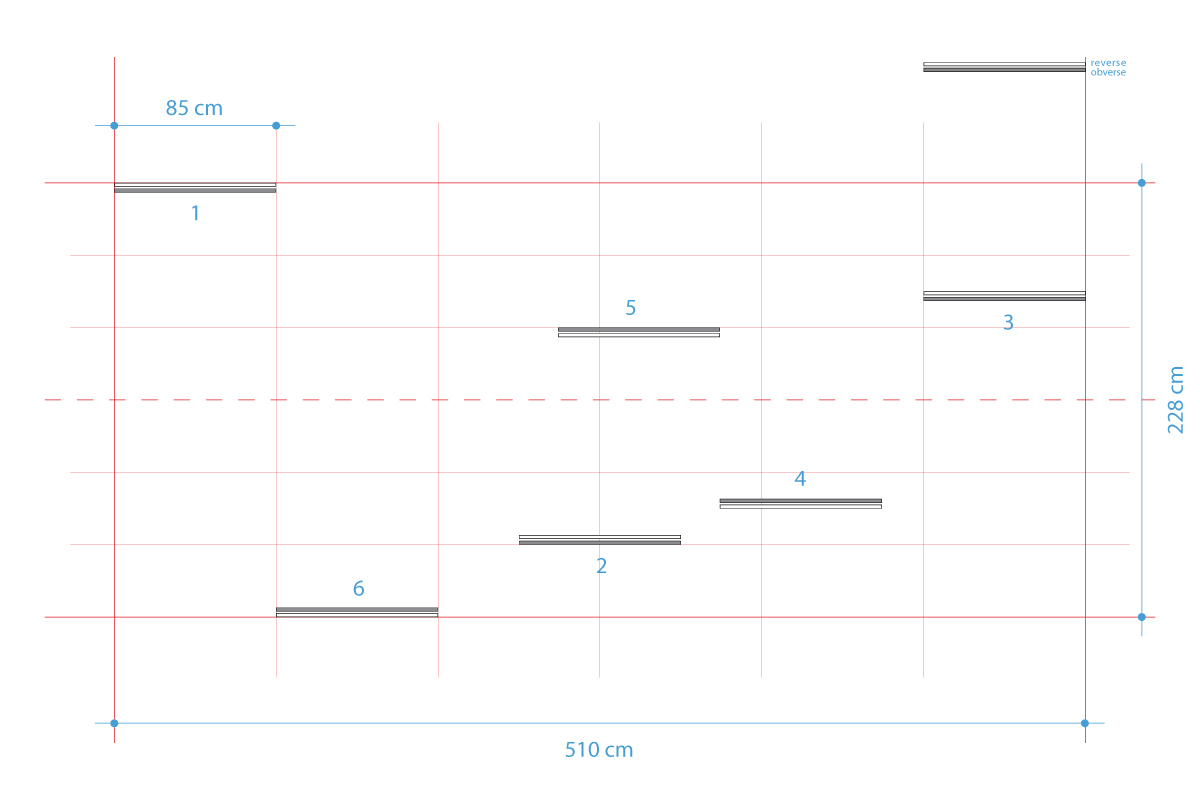
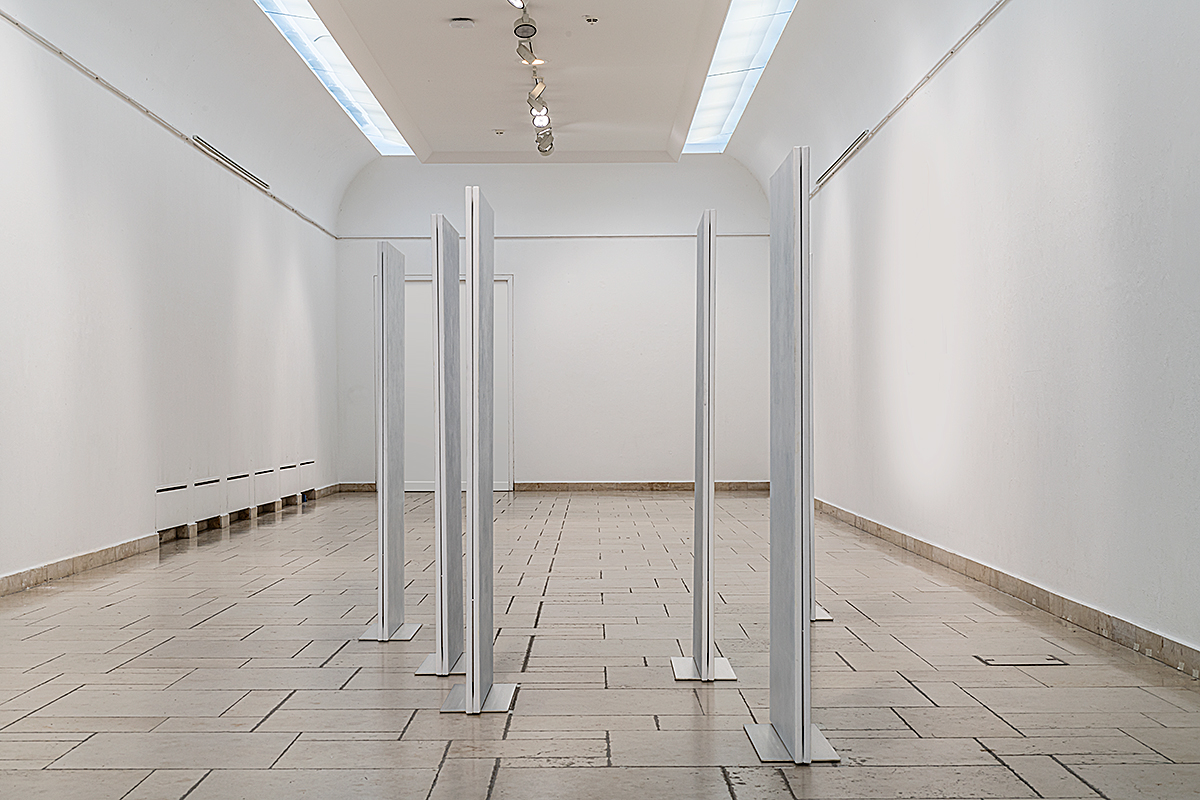
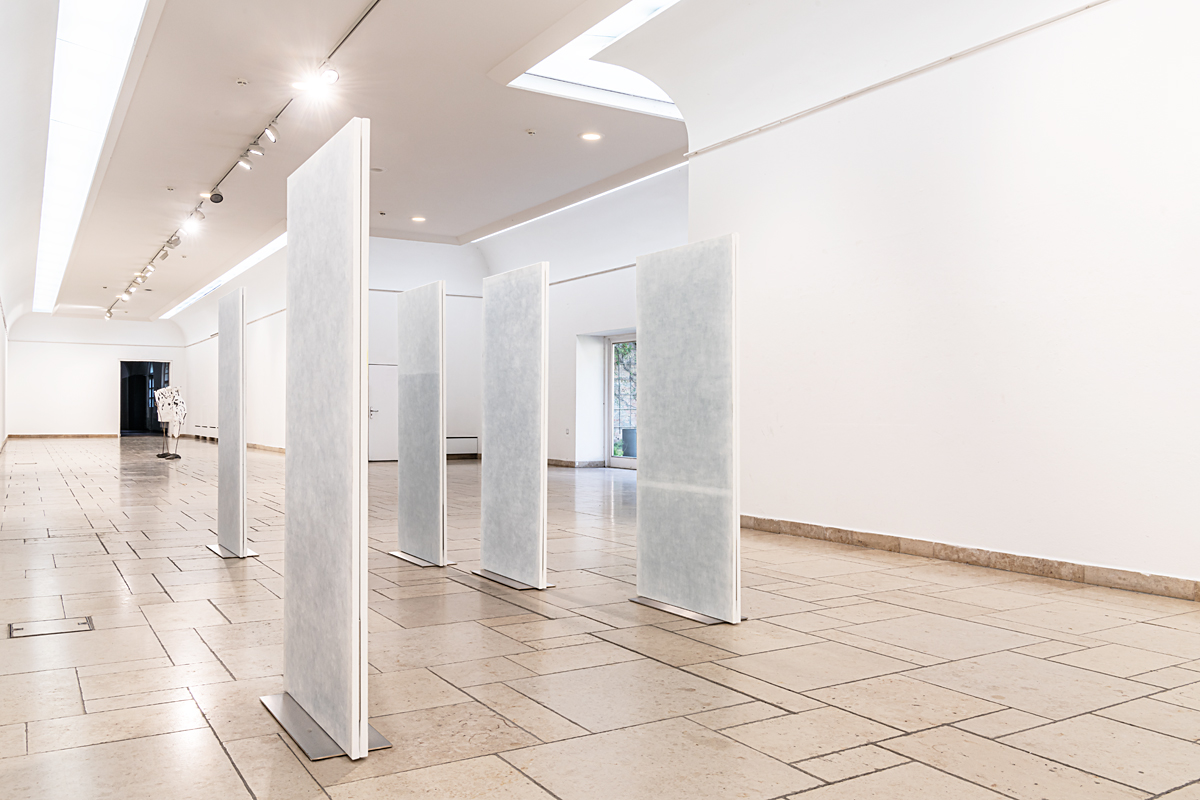
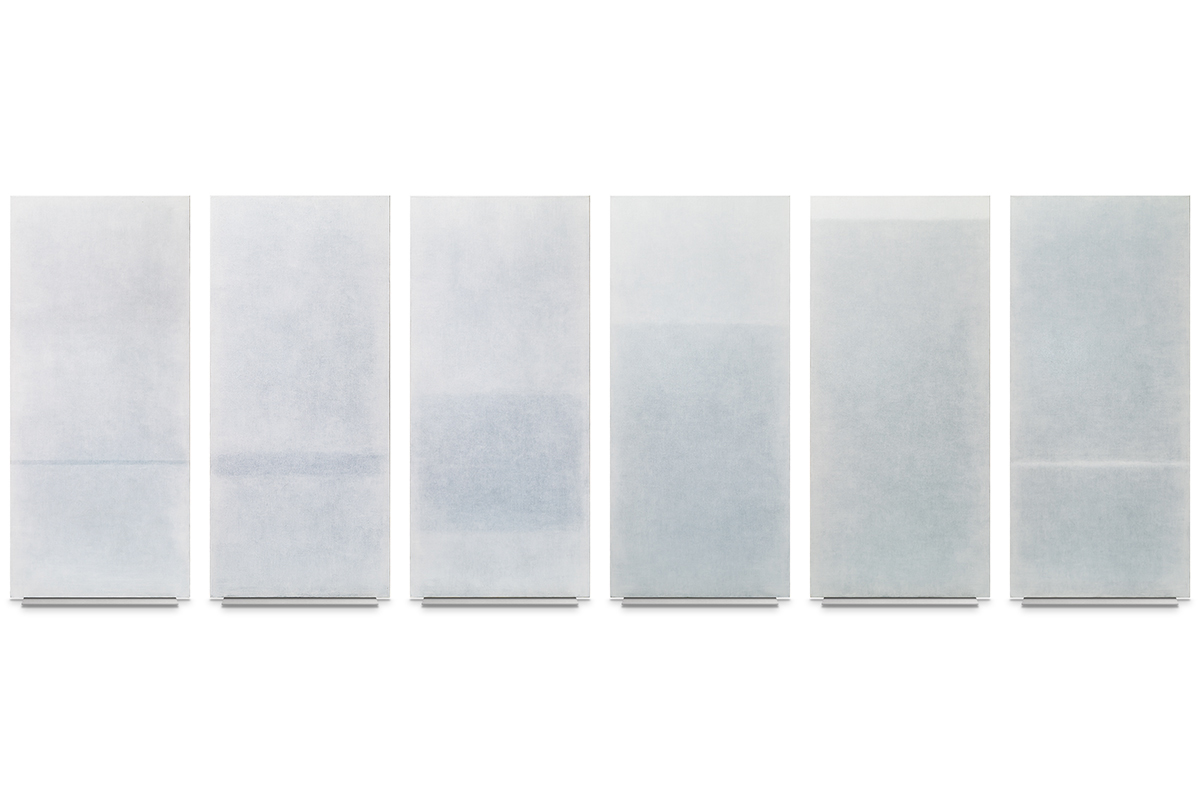
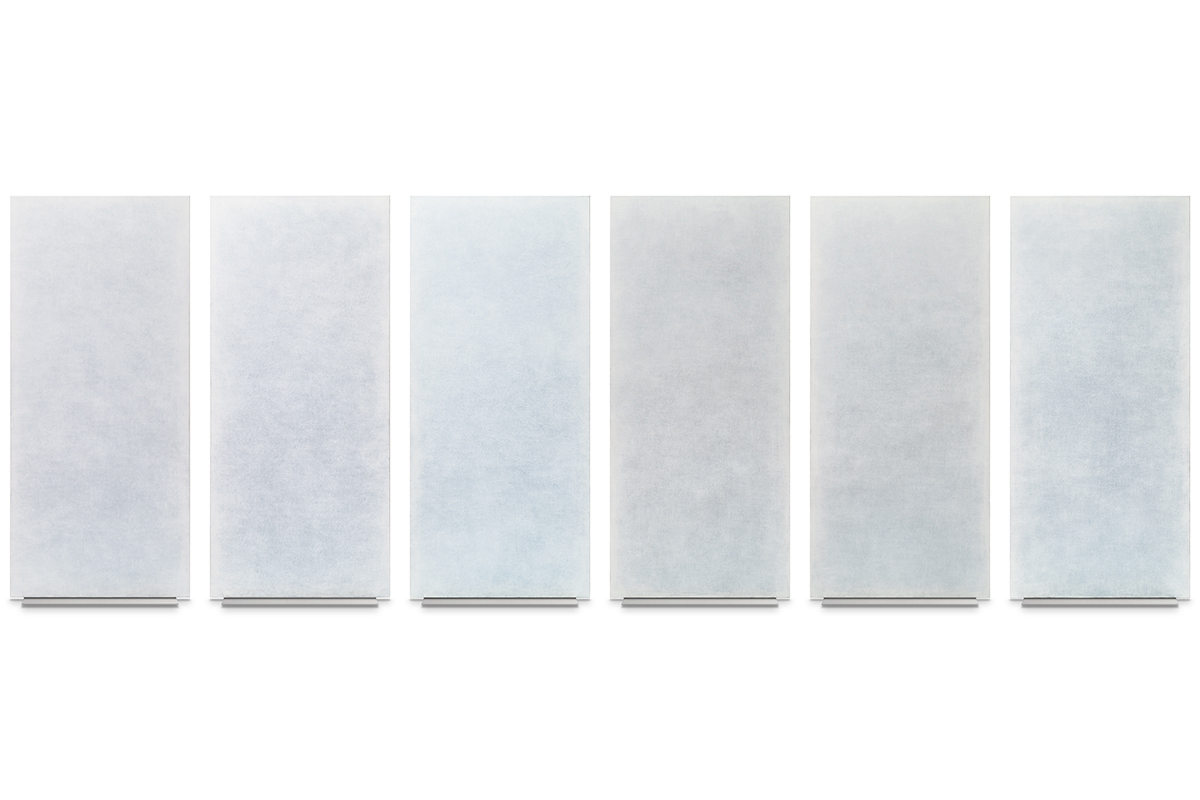
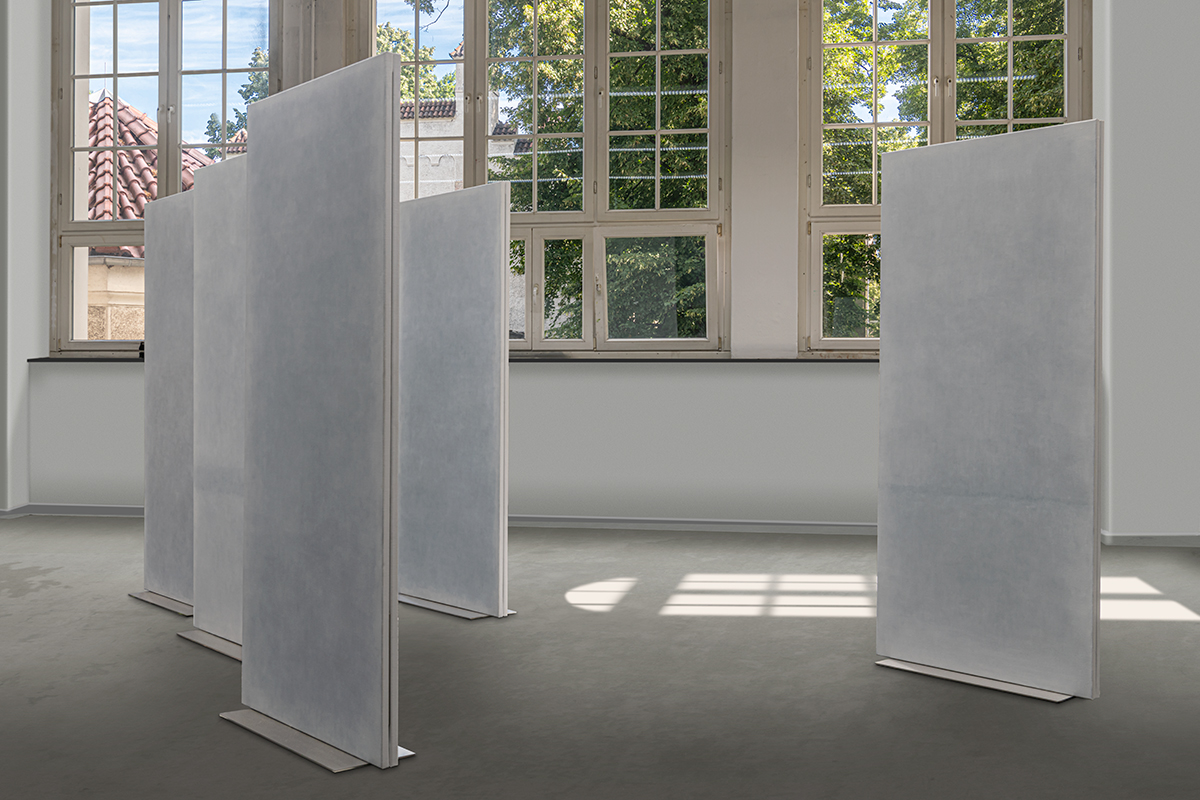
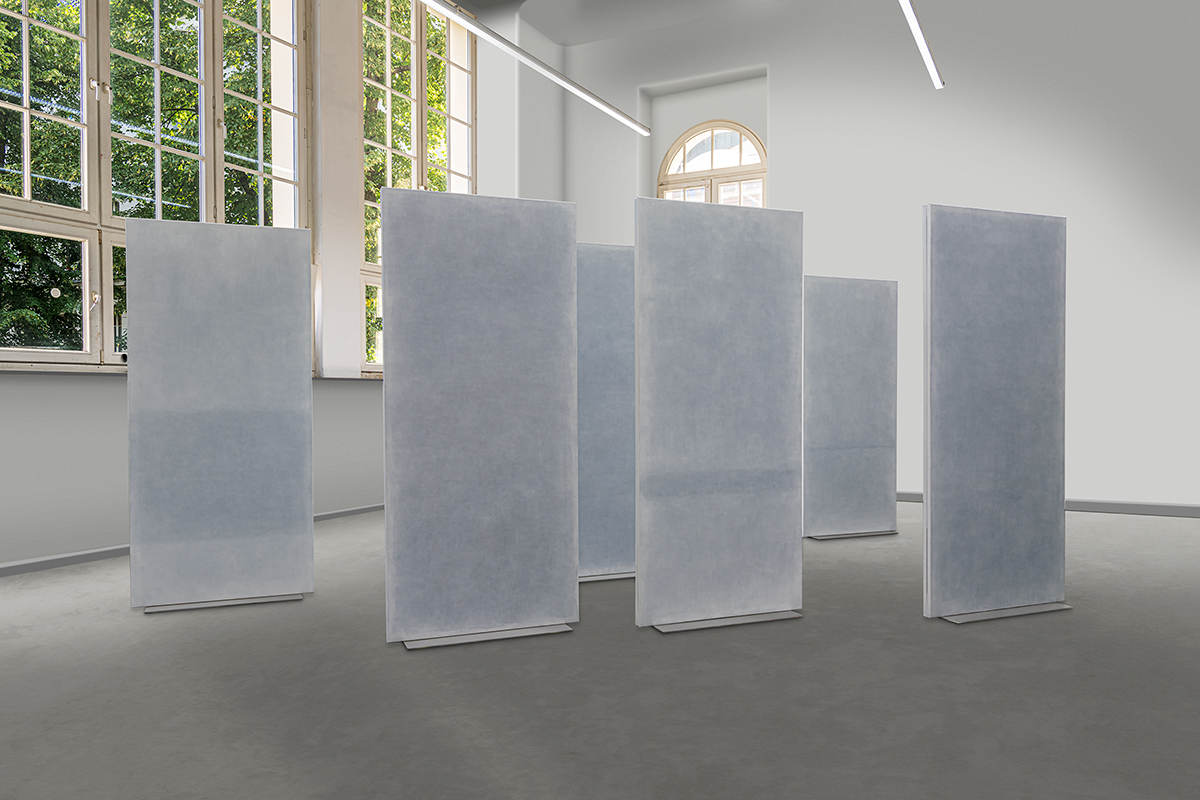
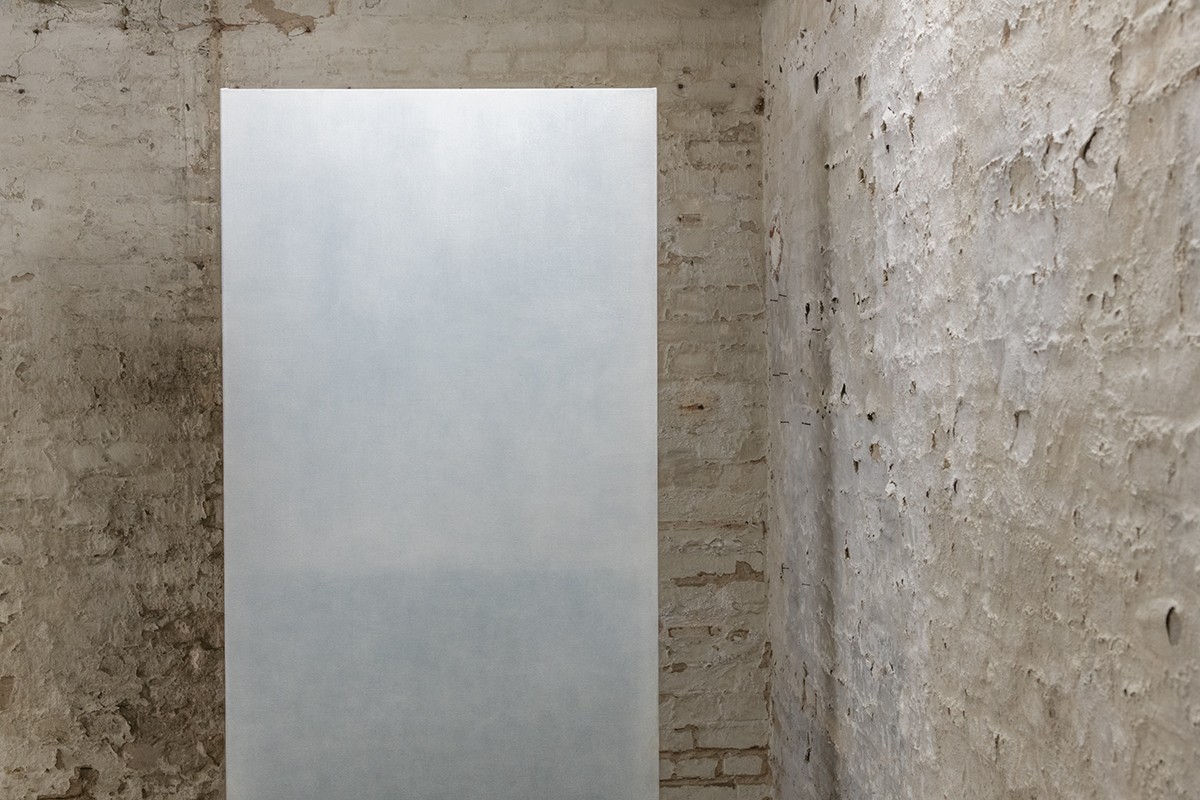
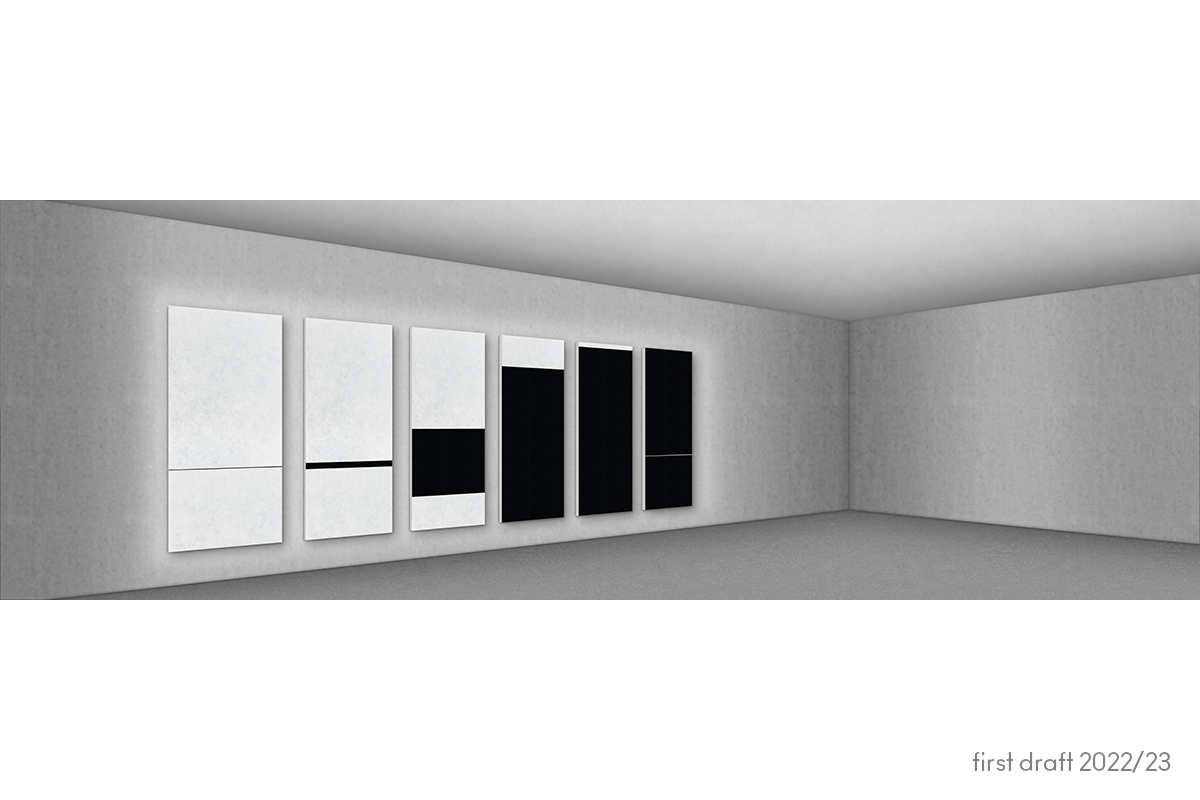
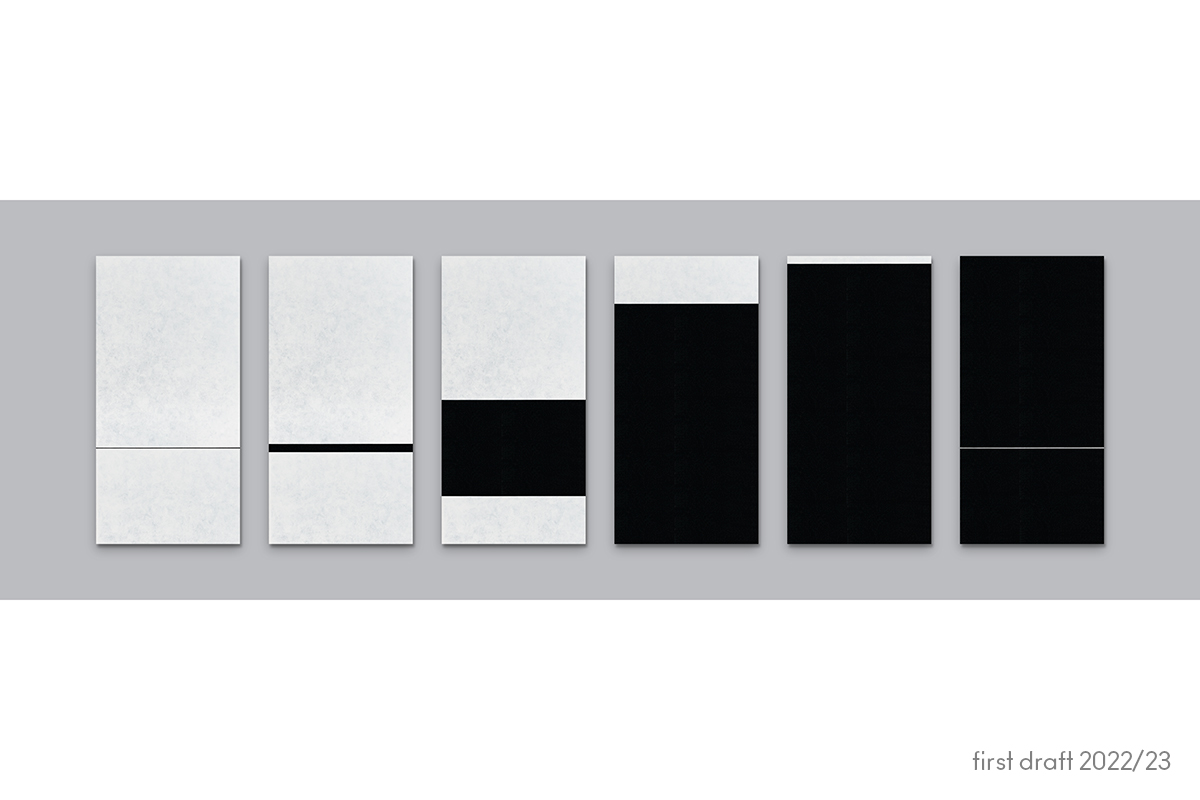
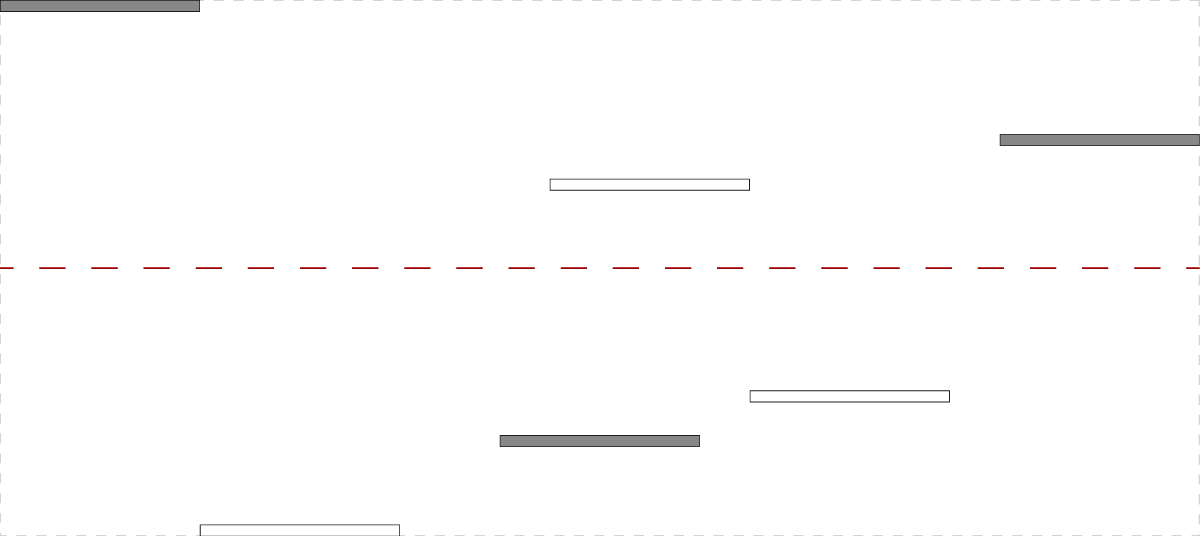
Fragmented line is a work of lines. To be specific, it is a work that consists of a direct central line, around which two lines curl, similar to the notation of the right (panels 1-3) and left hand (panels 4-6) on a sheet of piano music. Two lines that, played together, form the single line, the gestalt of the music. These later lines consist of panels marking points within a field, one line showing the front side of its panels (1-3) in one direction, the other (panels 4-6) in the opposite direction. The whole work can thus not be viewed from one point in space, but asks the viewer to become an active participant and to move across these lines.
Fragmented line is a work of structure. It is built on self-similarity in its relation on how the panels relate to each other and to the field in which they are placed.
Fragmented line is a work of metaphors. When talking about time using common phrases, we conceptualise time in terms of space, either as the metaphor time as a moving object (in space) or time as a container (through which we move). The common element in those at first glance oppositional frameworks is the movement, something which we in turn tend to conceptualise via lines. A similar split can be seen in our common metaphorical conceptualisation of consciousness. The way we tend to metaphorically think about consciousness is also often in the form of consciousness as an object (‘let me regain my consciousness’), or consciousness as a substance (‘stream of consciousness’), or consciousness as a container for our perception of events (‘field of consciousness’). Furthermore, if we say that events are points are objects fixed in time (as a container) and the manner in which we perceive the world around us is as a series of events, we come to, metaphorically, a set of objects (events) fixed on a line (time) within a field (consciousness).
The question I was asking myself was the following: what happens, when that fixed structure breaks down? I asked myself this question not solely out of theoretical interest, but as a reaction to seeing a rapidly evolving case of dementia of my grandmother. There was a disruption in the coherence of speech and communication. The red line had been cut into snippets. It is still there, still present, but discontinuous, fragmented. Being present in such a situation can be confusing, may ask you to react in a situation you do not comprehend. And that is something I am also asking of the viewer.